Jornada Group
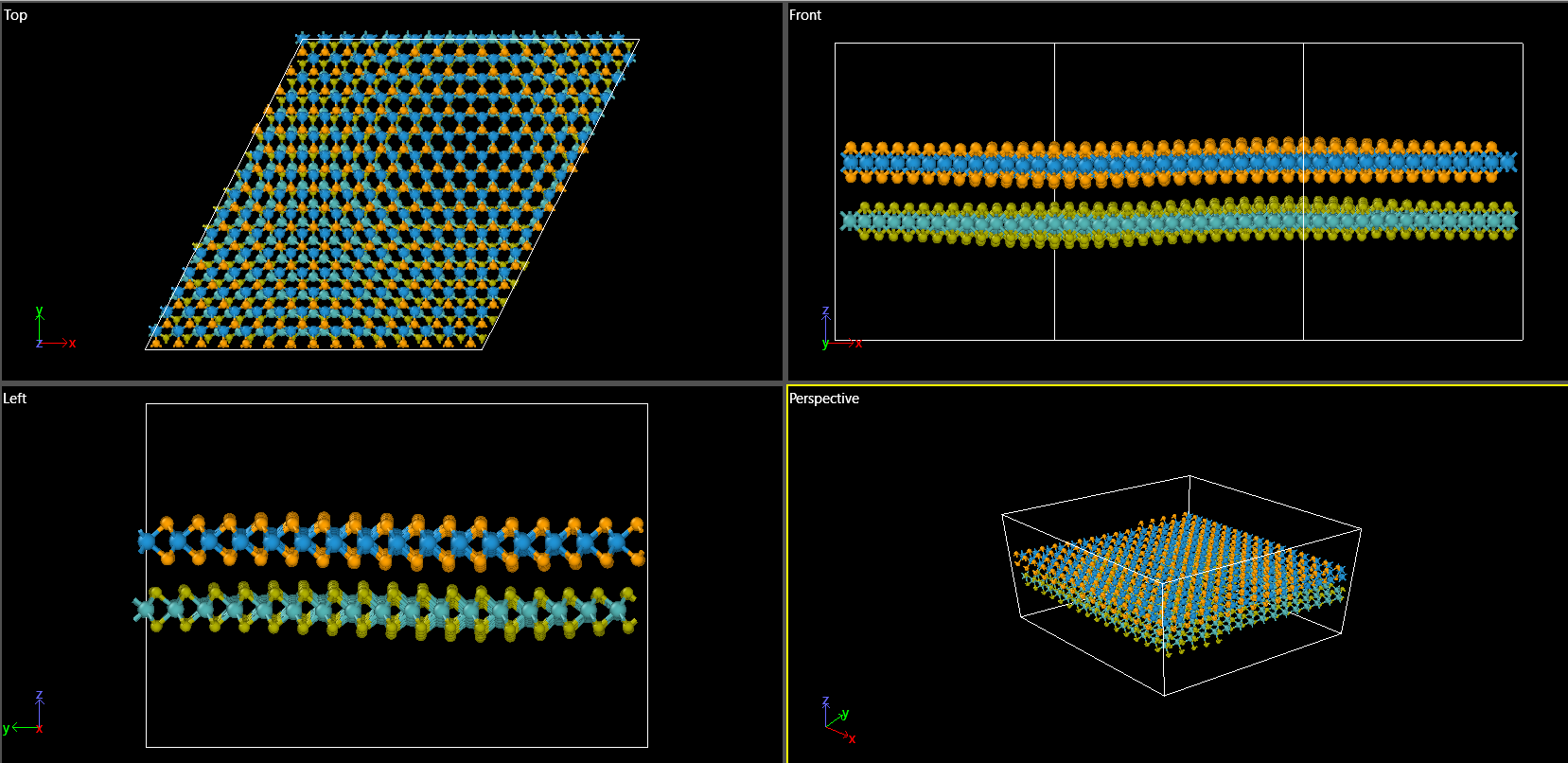
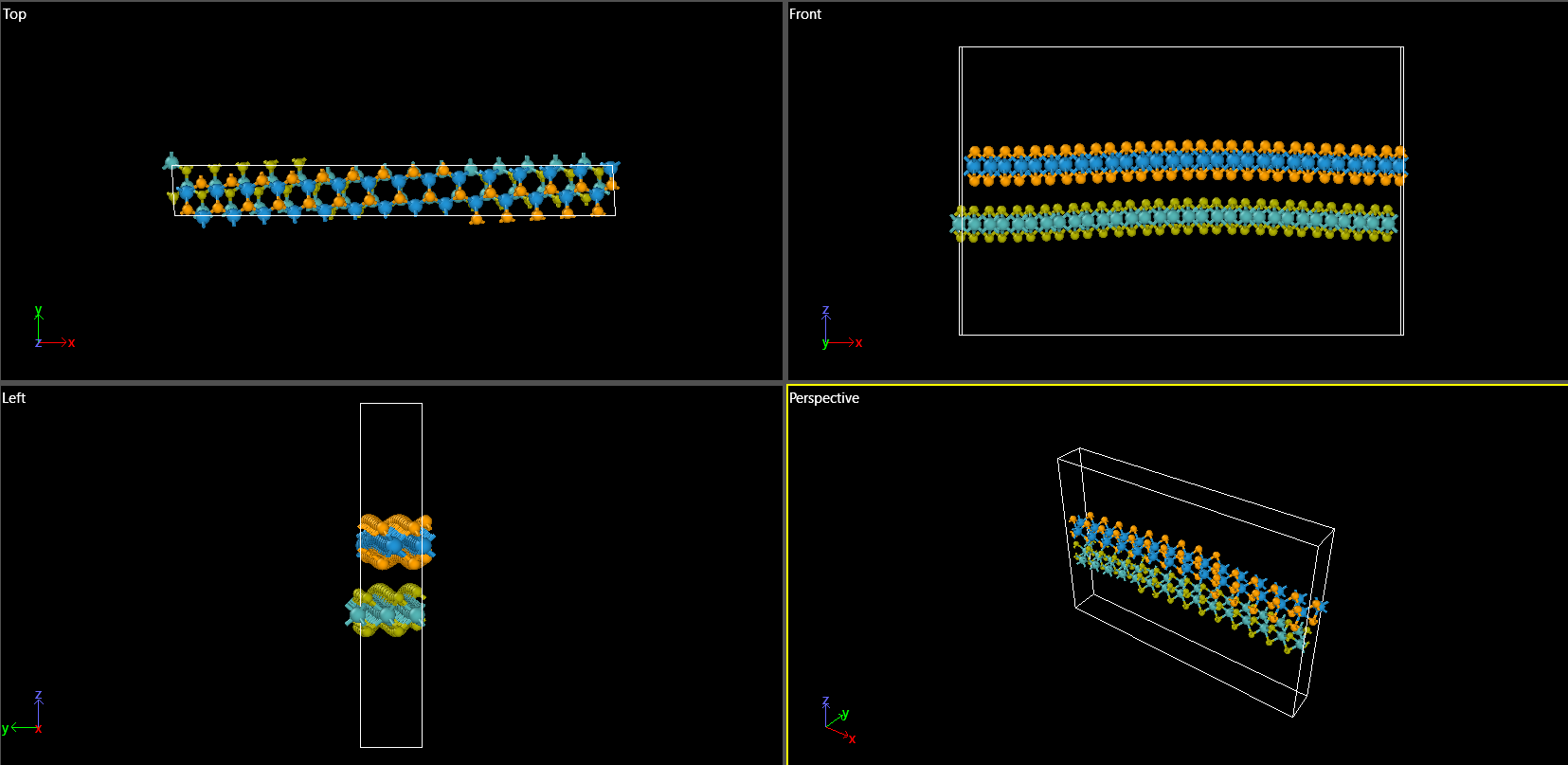
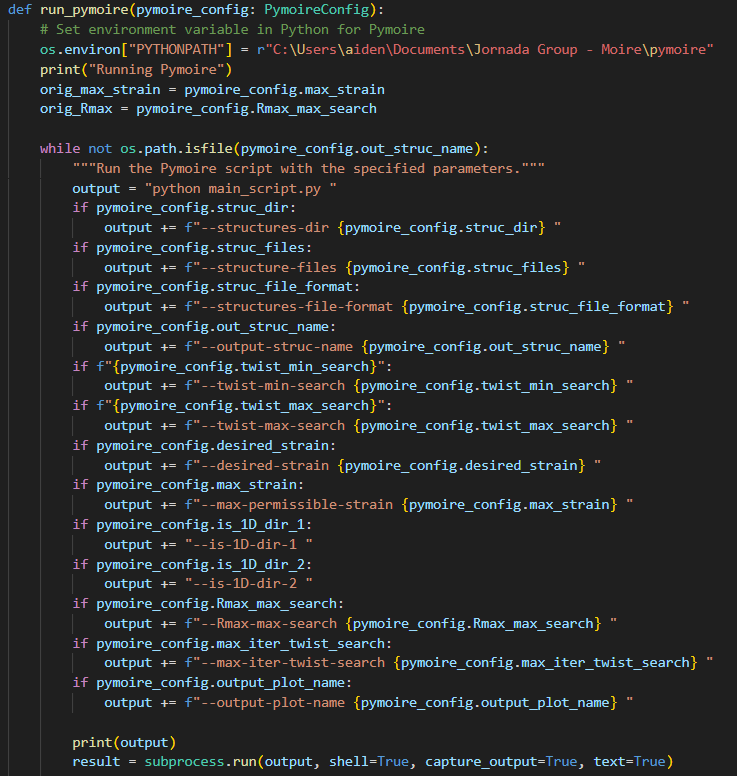
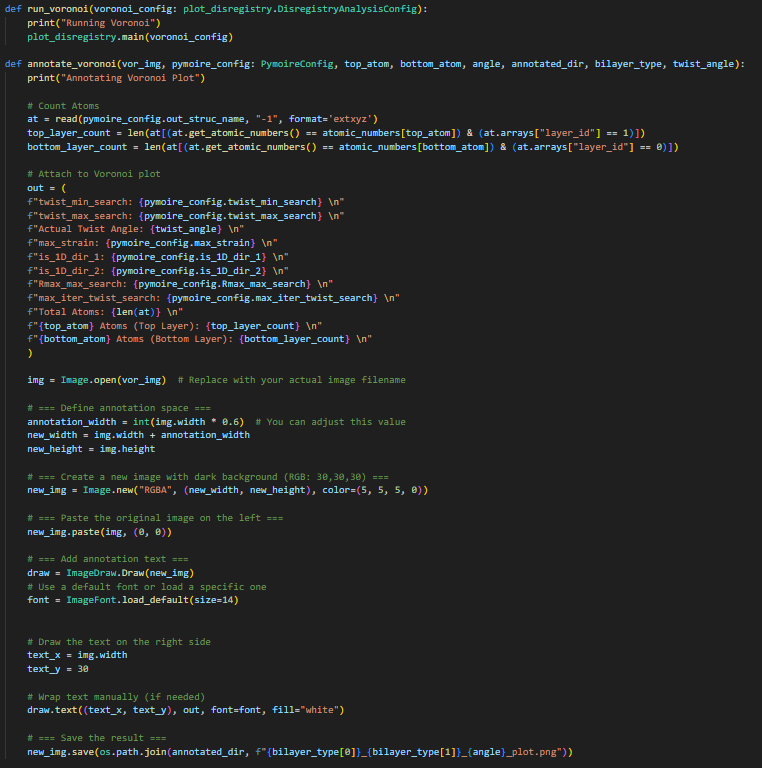
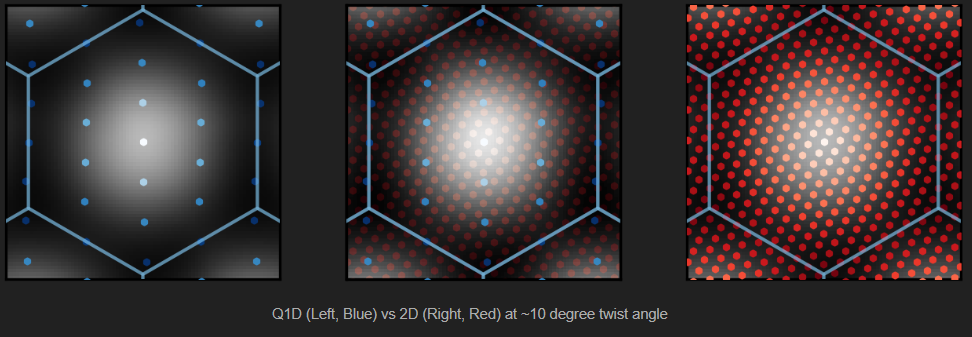
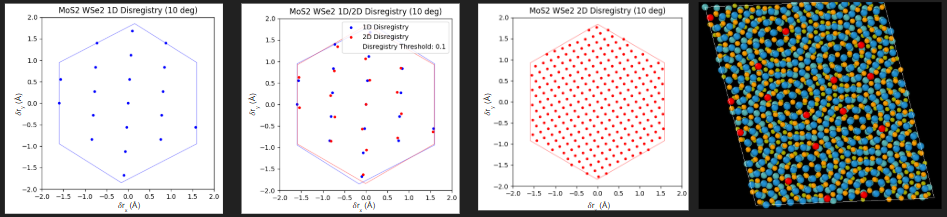
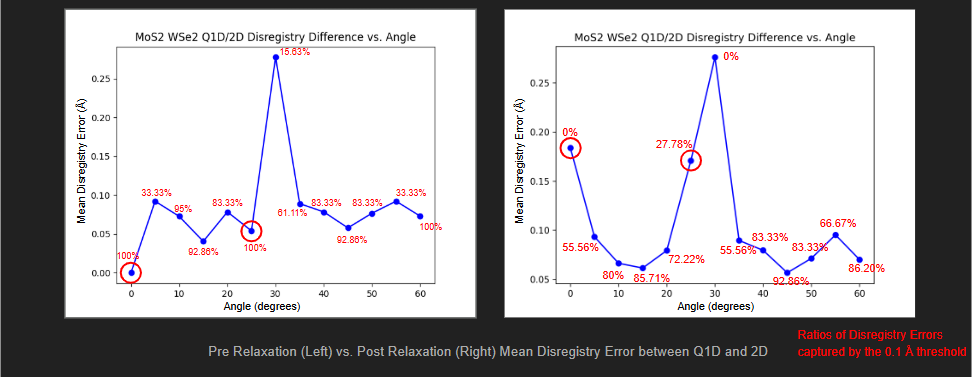
During the summer of 2025, I served as an Undergraduate Researcher at Stanford University within the Jornada Group, under the guidance of PI Felipe H. da Jornada and mentors Johnathan Georgaras and Akash Ramdas. My research focused on investigating quasi-1D (q1D) structures as potential surrogates for 2D structures in the training and validation of machine-learned interatomic potentials (MLIPs). Specifically, I analyzed transition metal dichalcogenide bilayer configurations—including MoS2/WSe2 heterobilayers and MoS2 homobilayers across various twist angles. Utilizing the Pymoire package, I generated 48 distinct q1D and 2D structures across a range of 0 to 60 degrees. I then performed structural relaxations using trained MLIPs and visualized the resulting atomic trajectories with Ovito. To evaluate the fidelity of the q1D surrogates, I employed Python libraries (ASE, NumPy, SciPy) to conduct Voronoi and disregistry analyses, comparing positional reconstruction and Mean Displacement Error (MDE) between the q1D and 2D models. My findings indicated that significant structural reconstruction primarily occurs at twist angles near 0, 30, and 60, and that MDE remains consistent post-relaxation, with higher accuracy (lower MDE) observed near the 0 and 60 marks. I concluded this experience by presenting these findings to the full laboratory group.
Skills Applied
Project Images