In Progress: Formula Electric at Berkeley
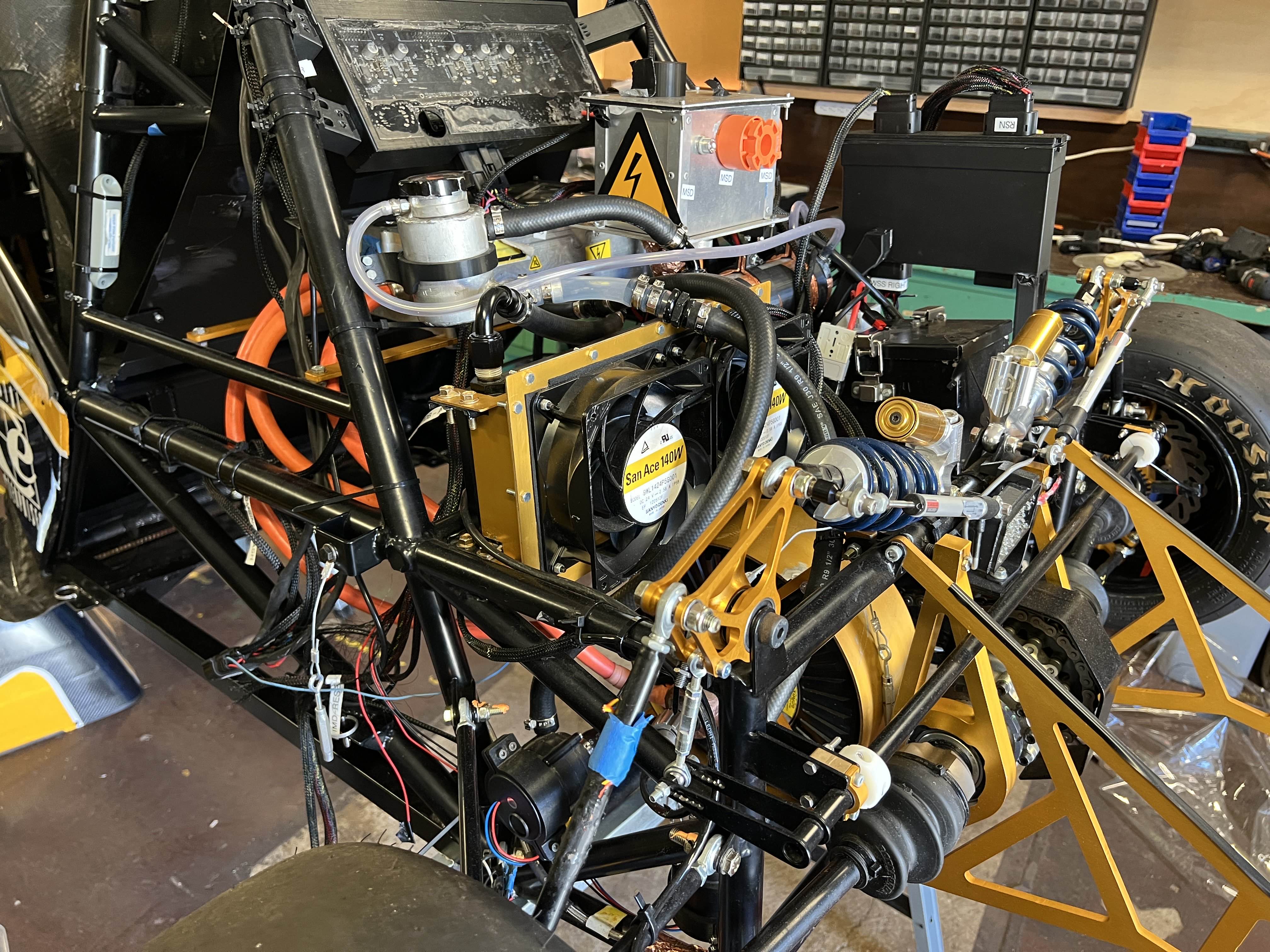
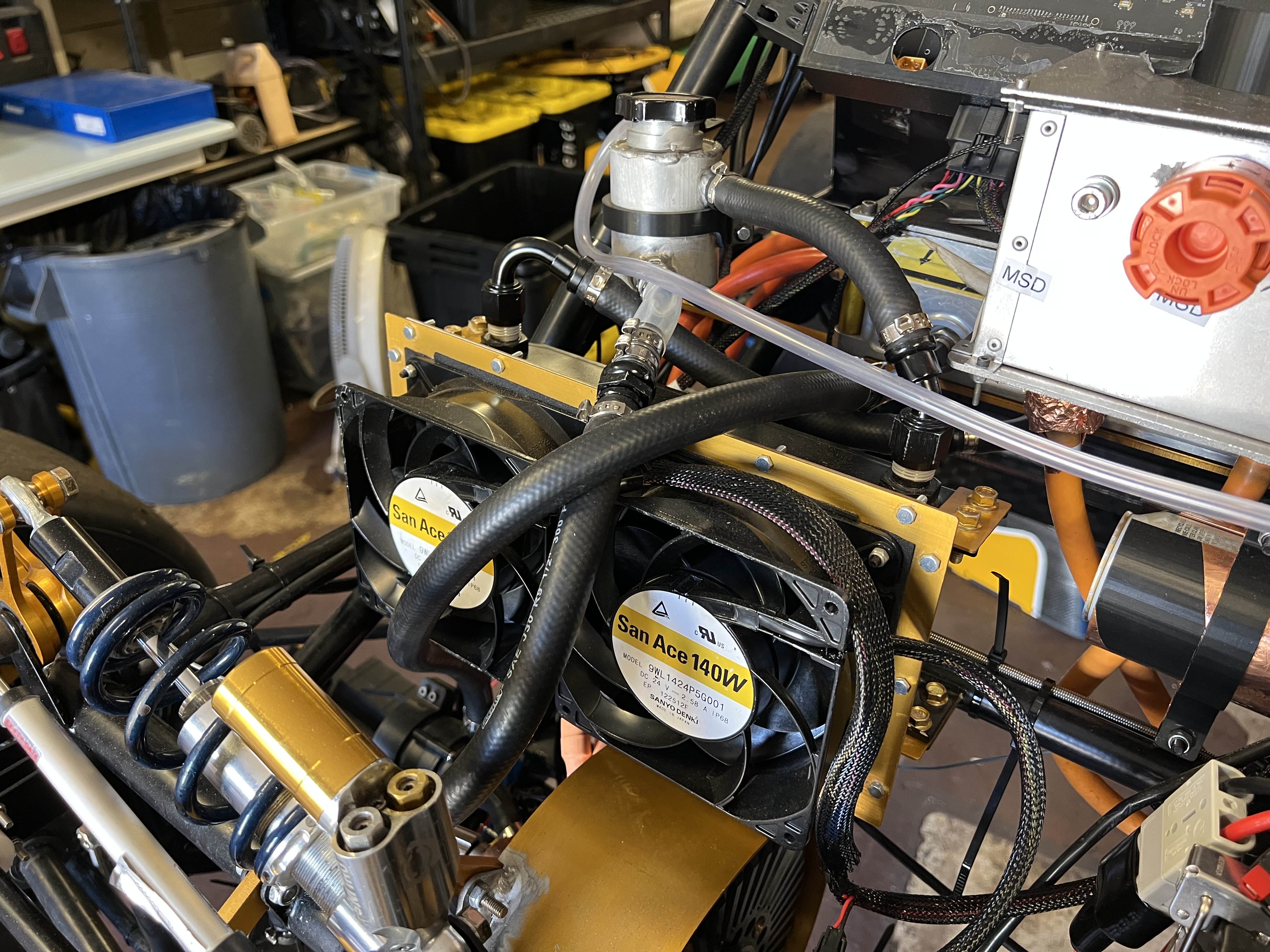
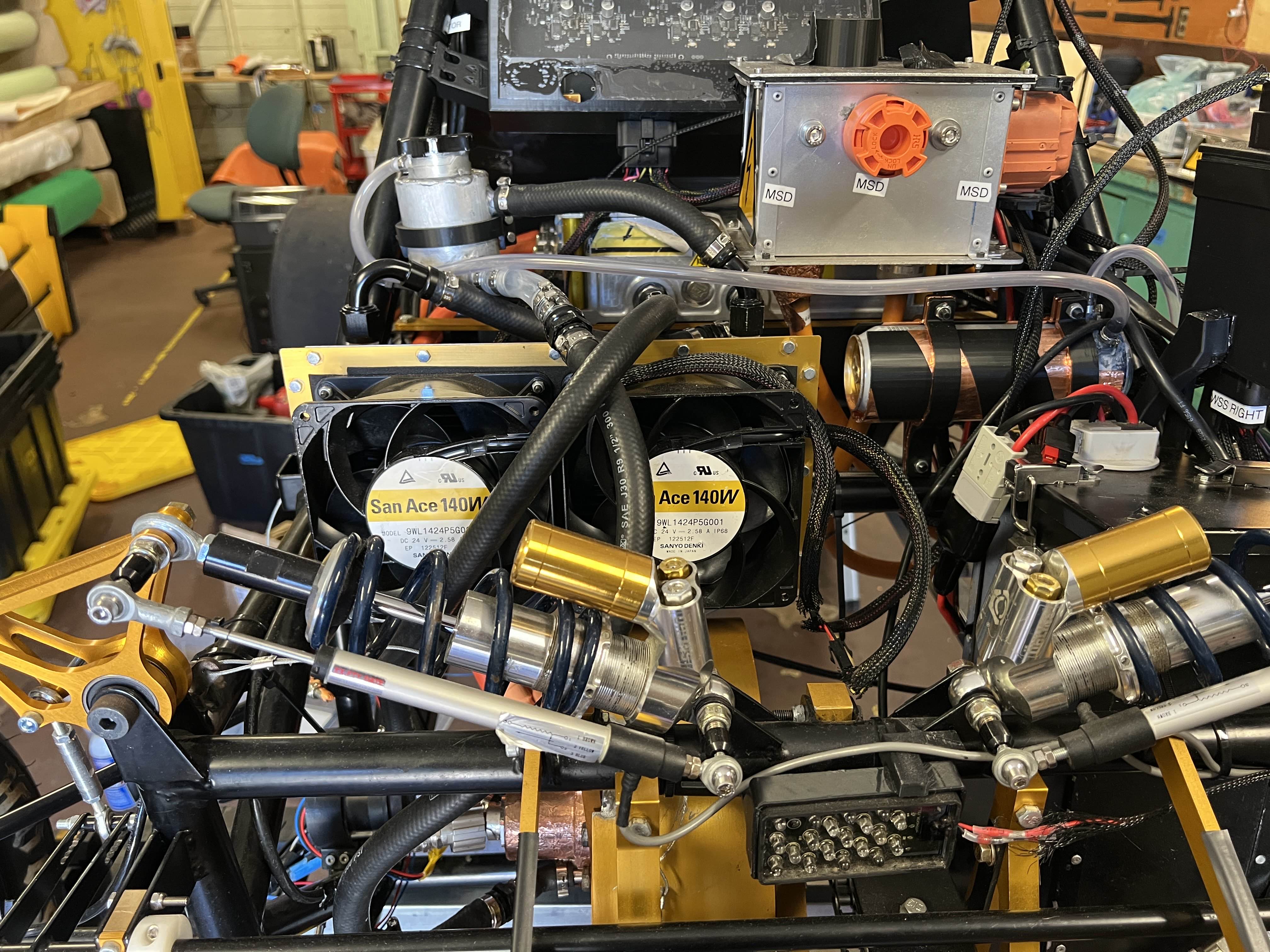
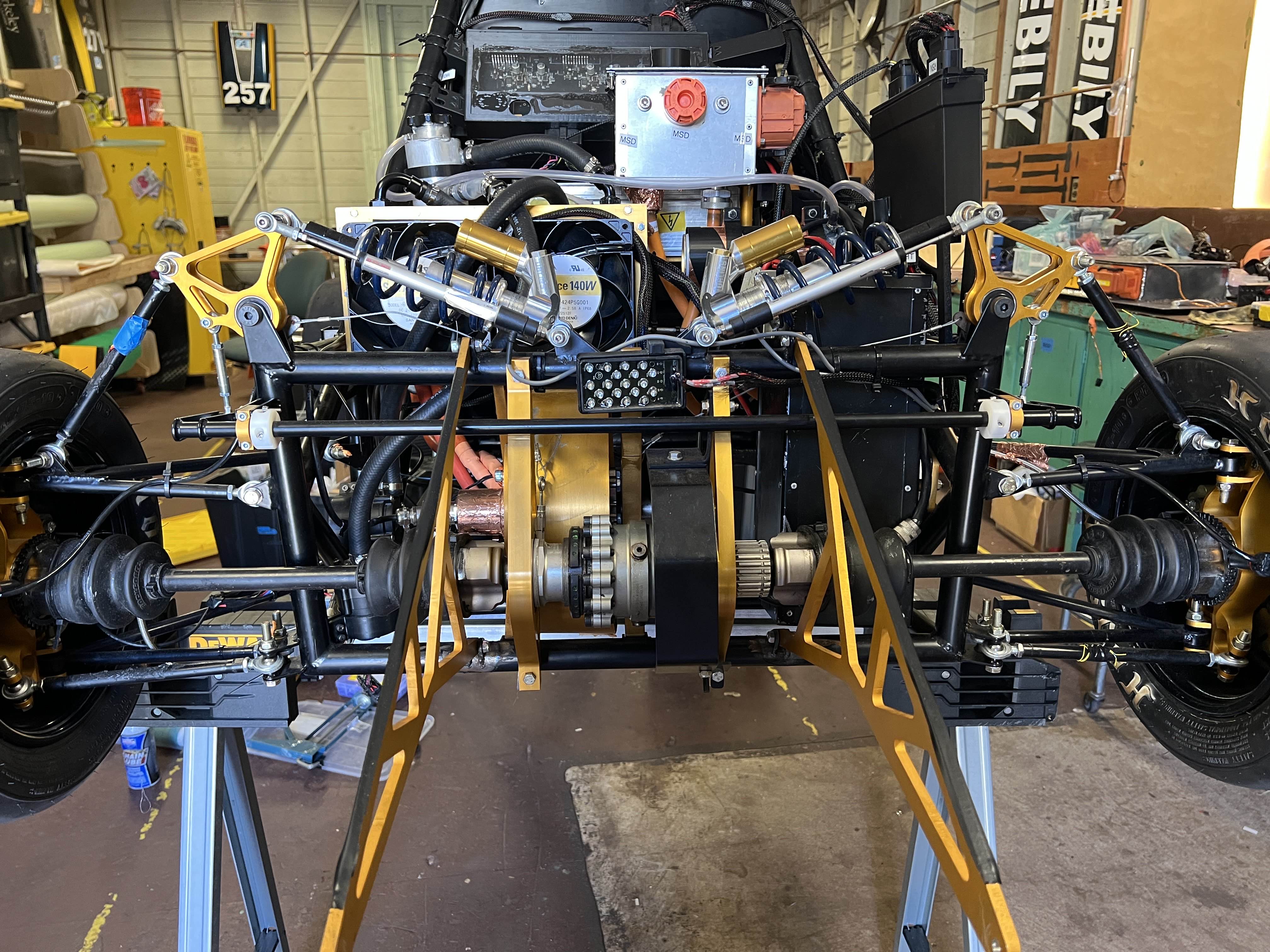
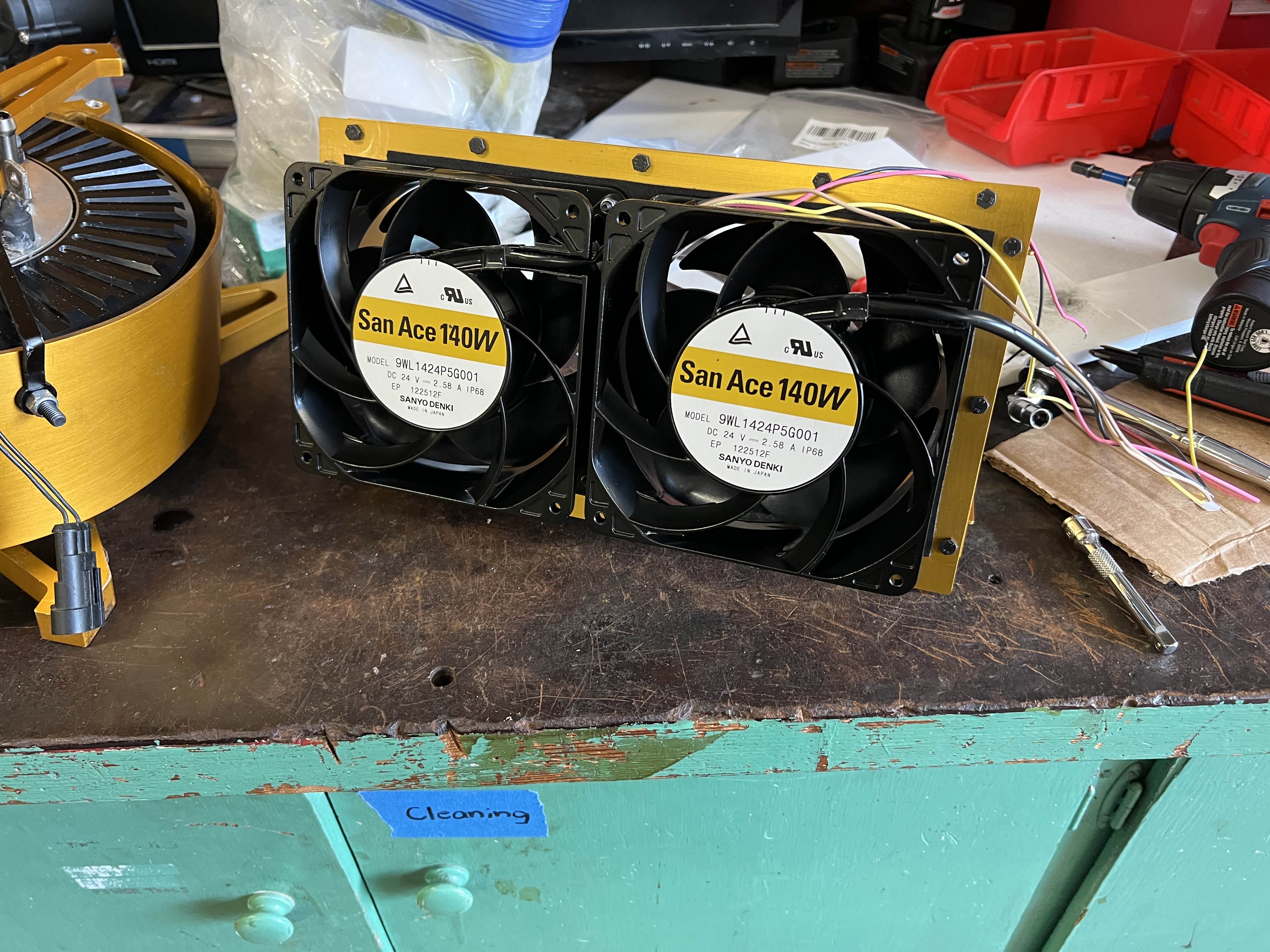
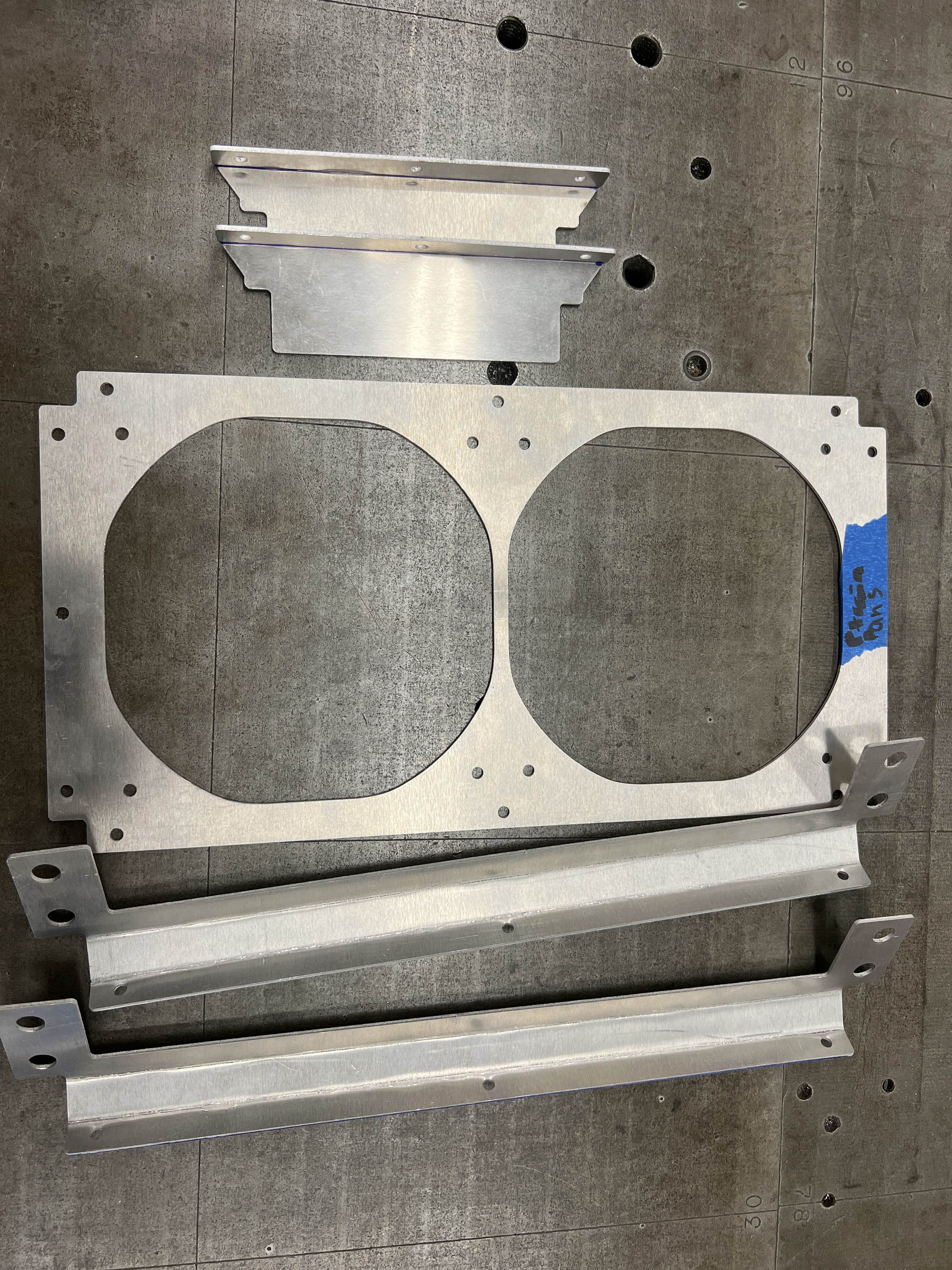
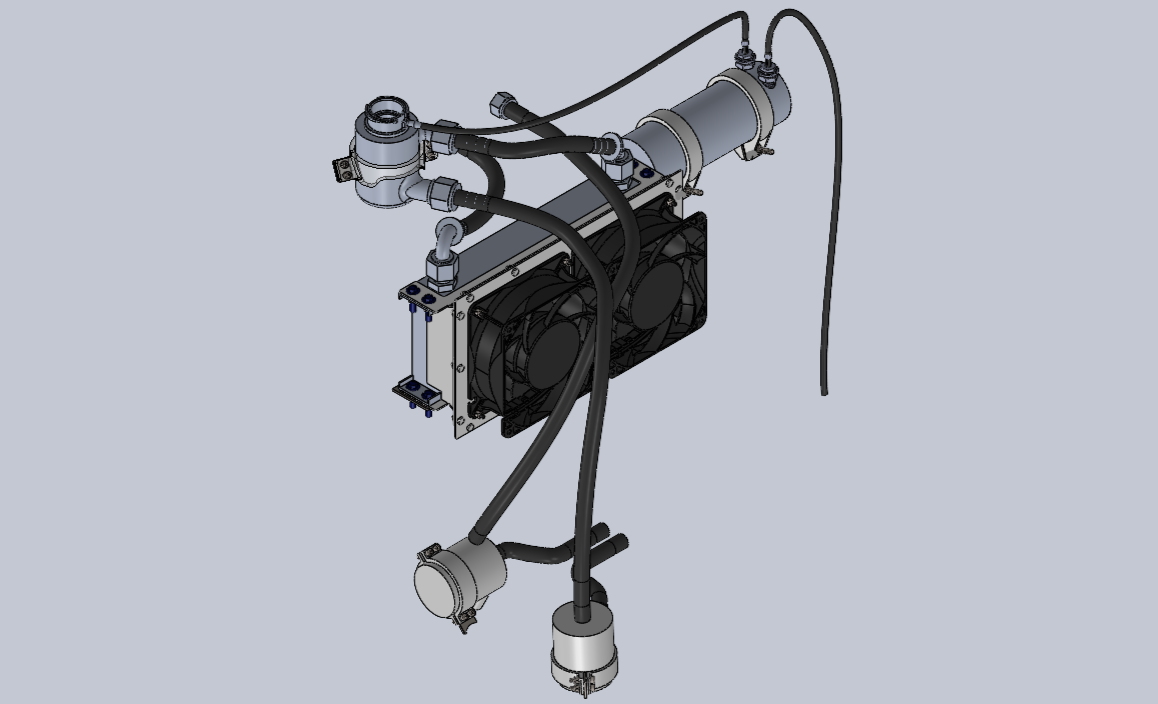
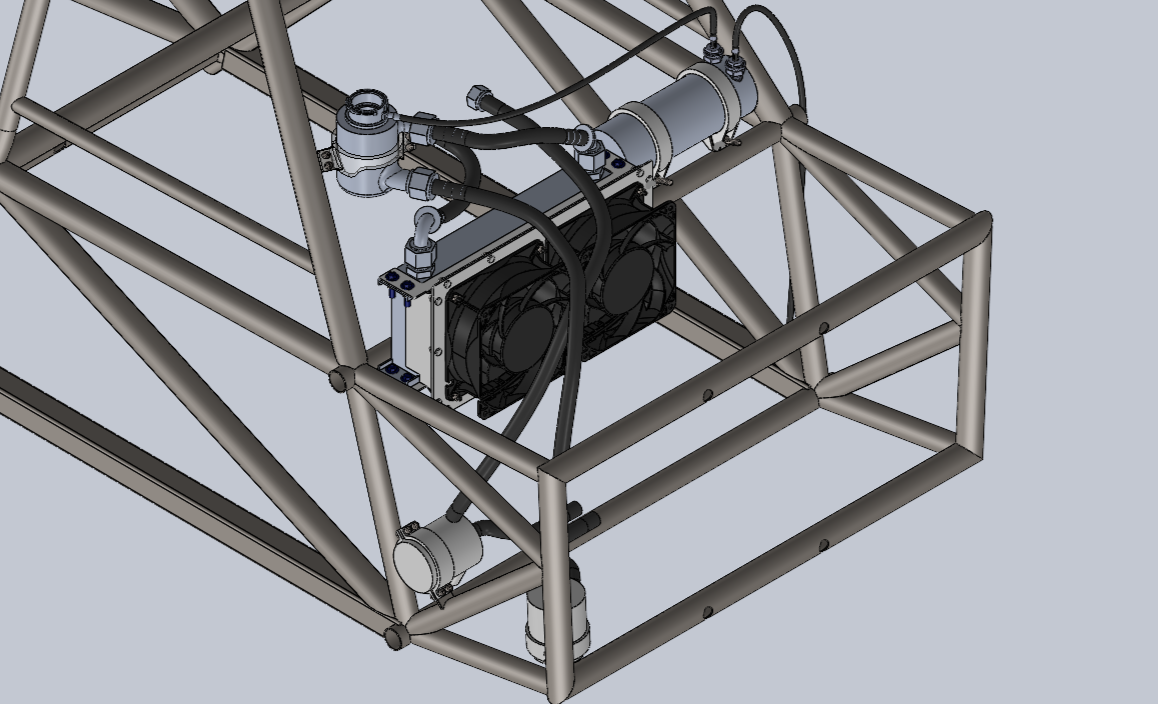
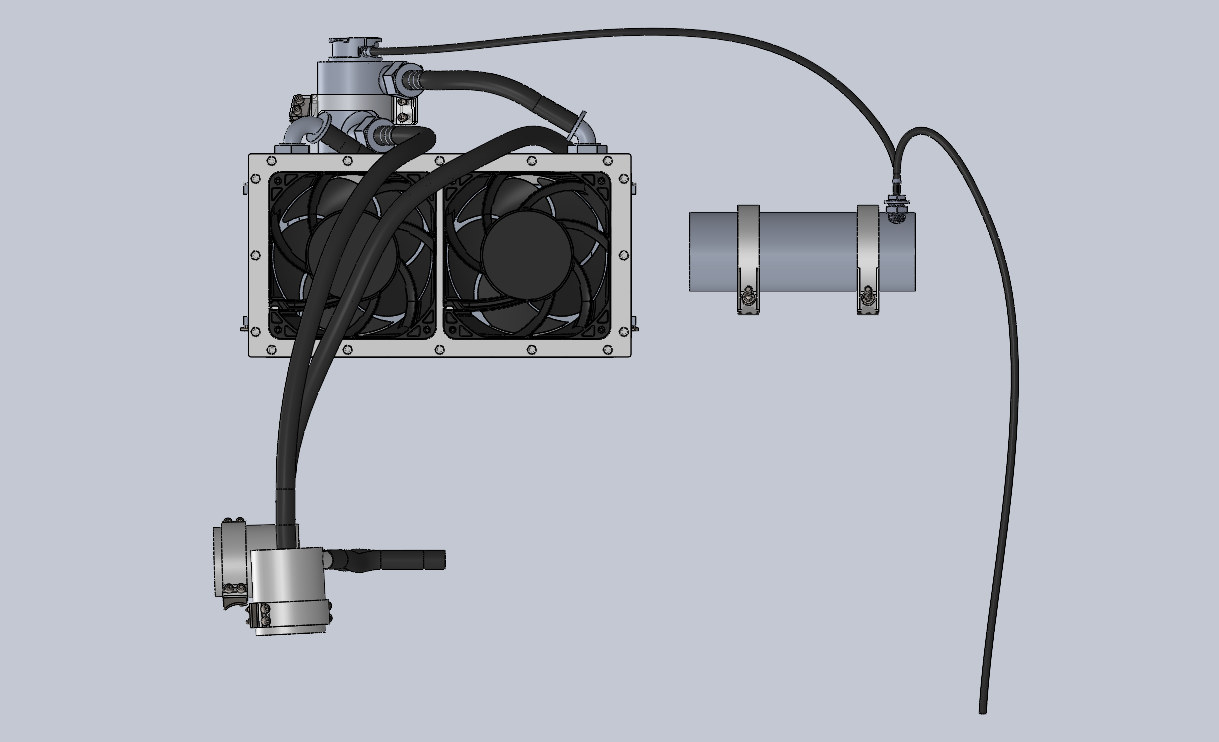
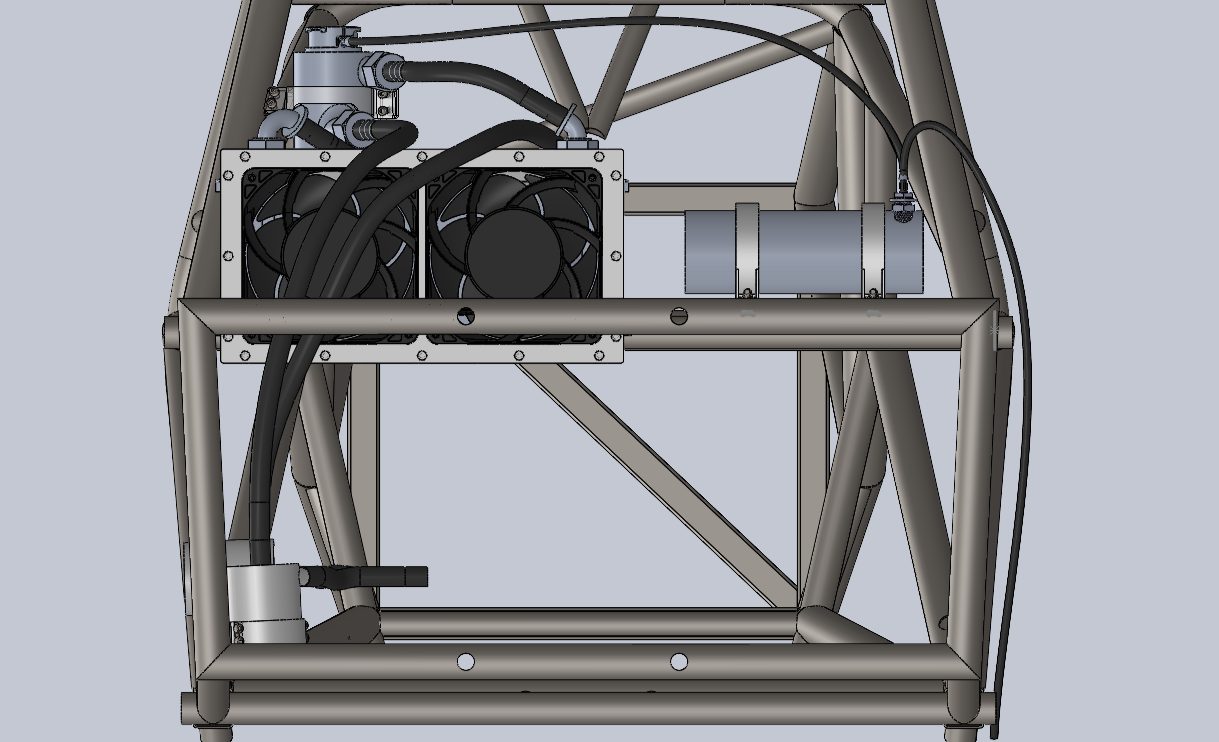
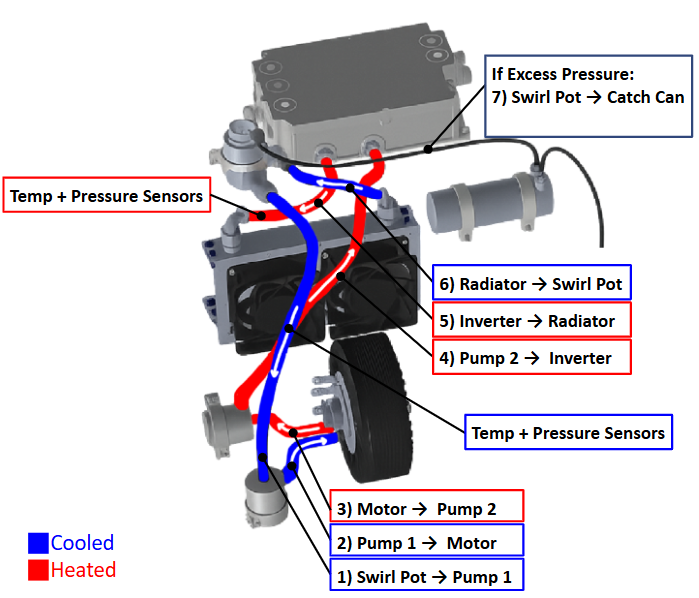
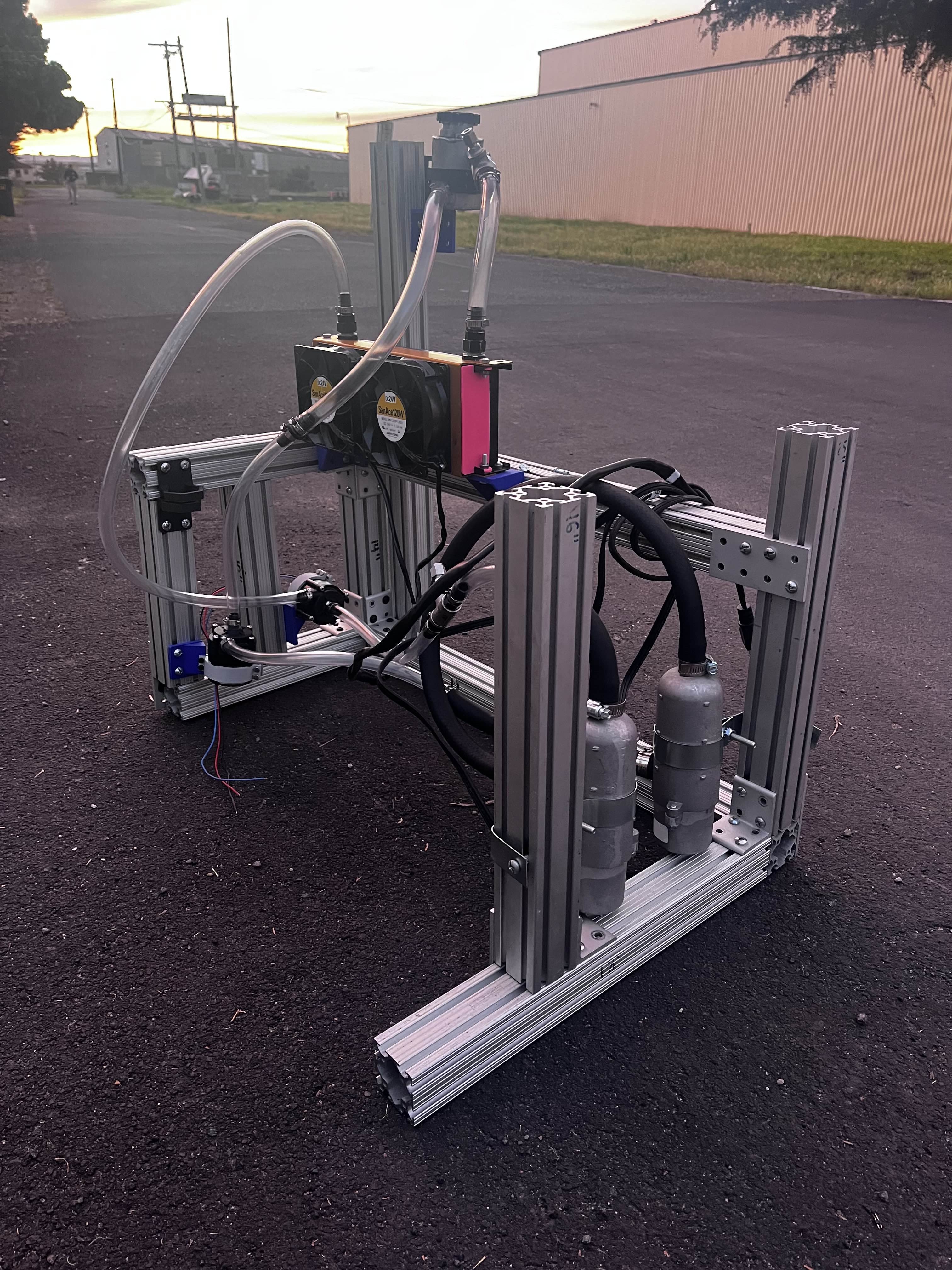
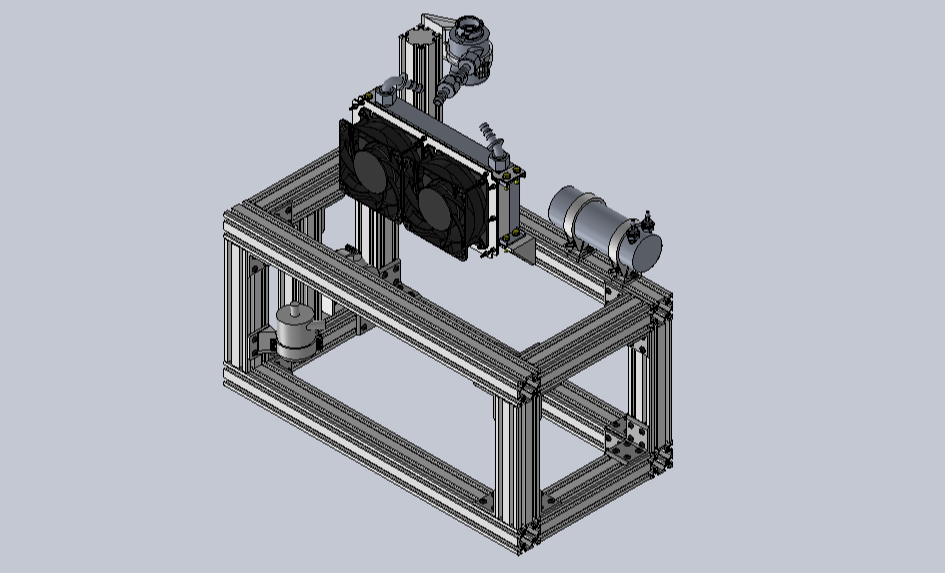
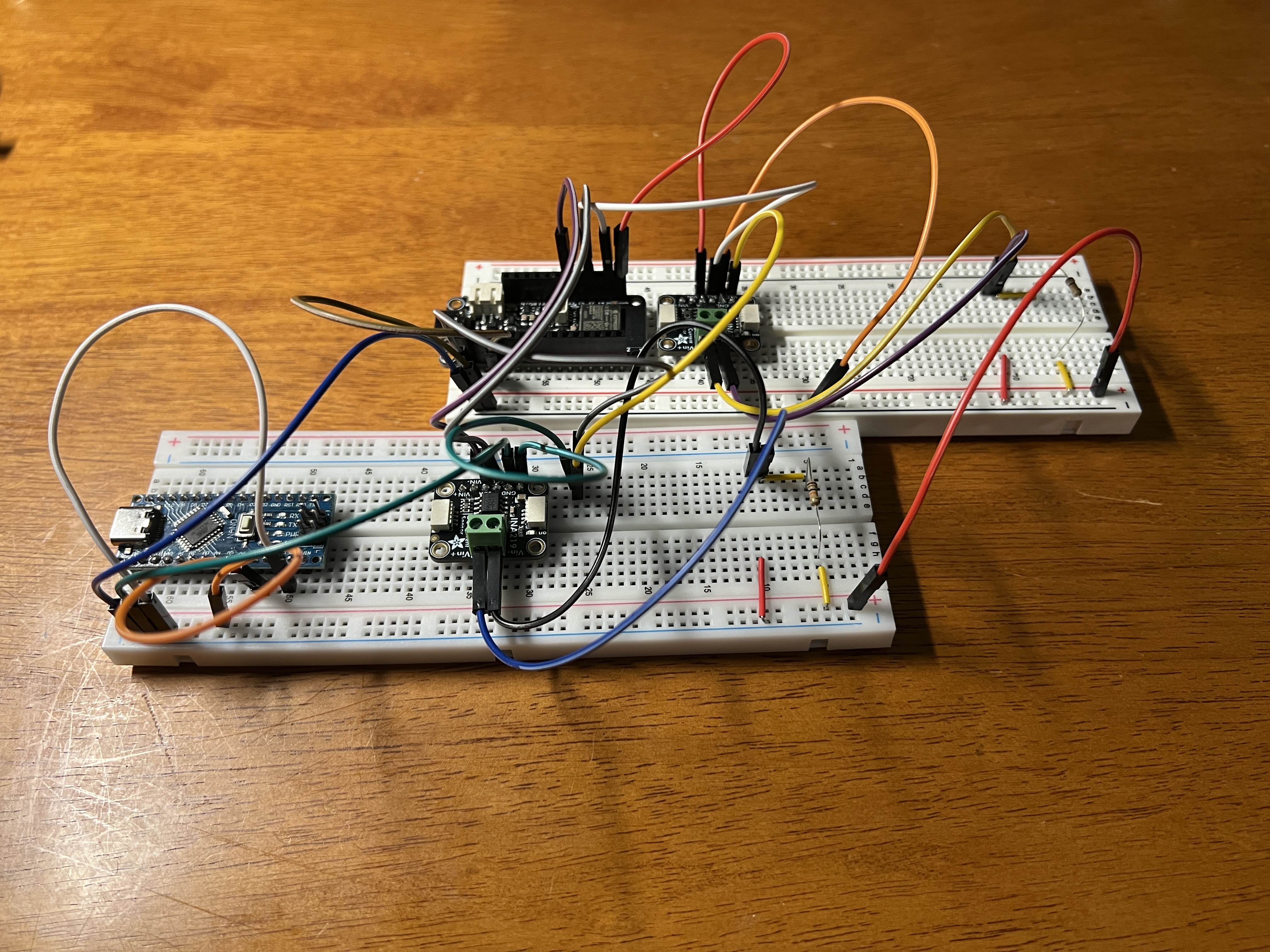
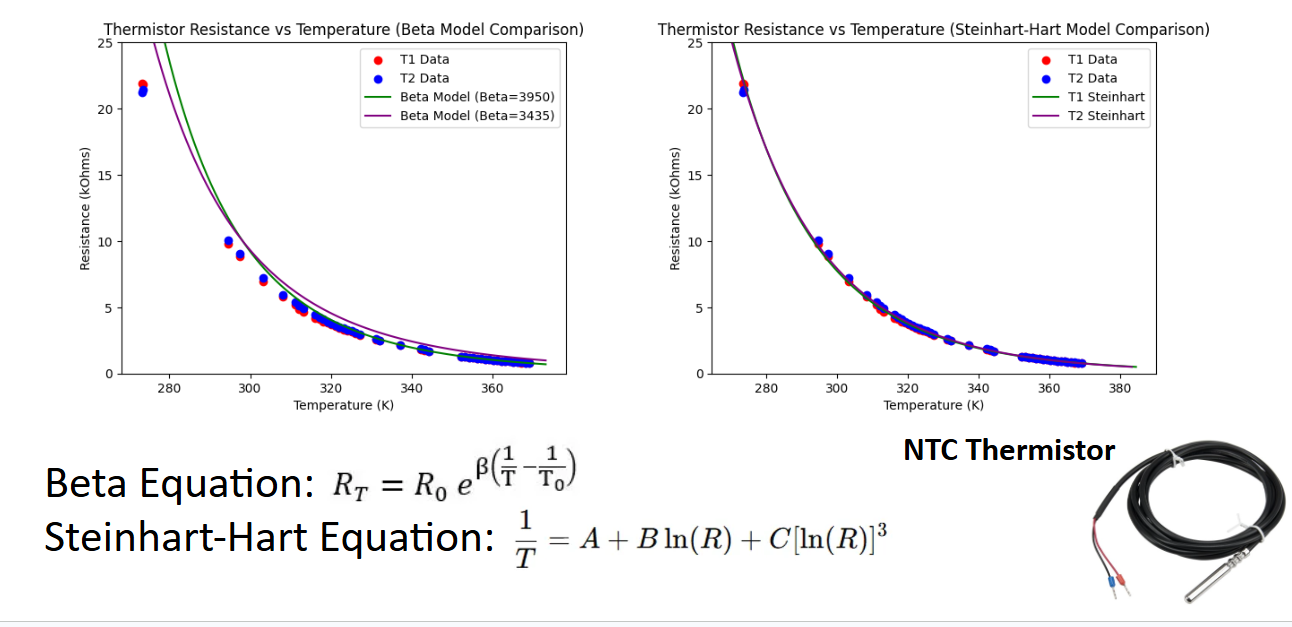
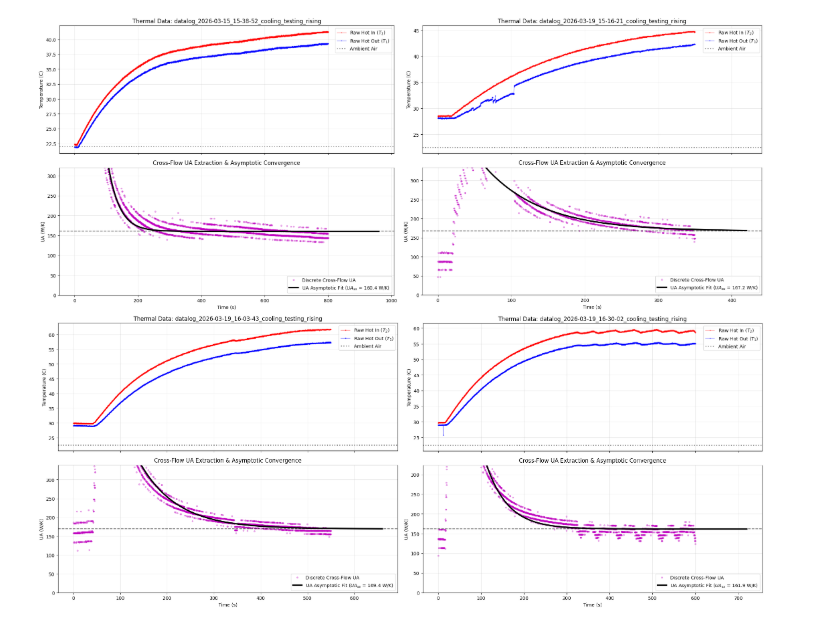
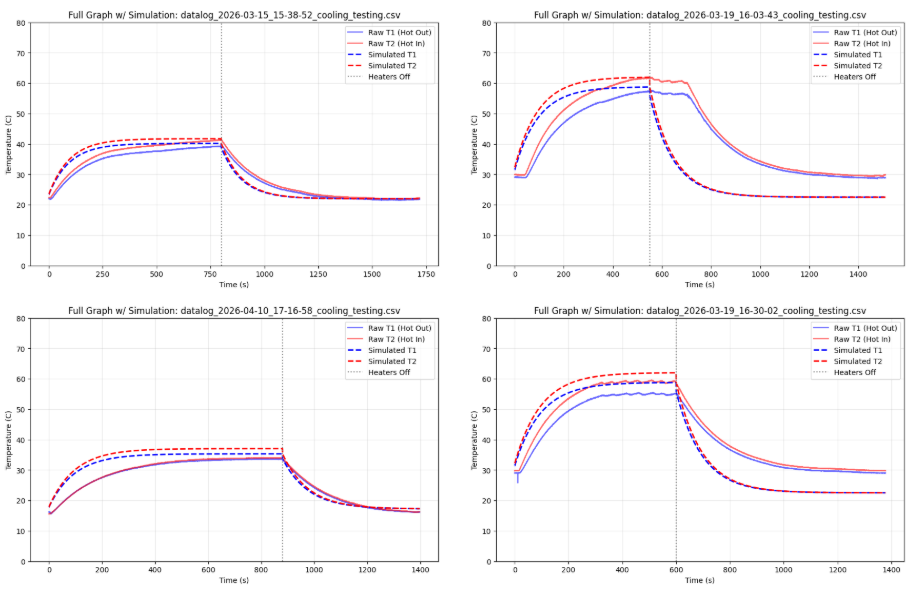
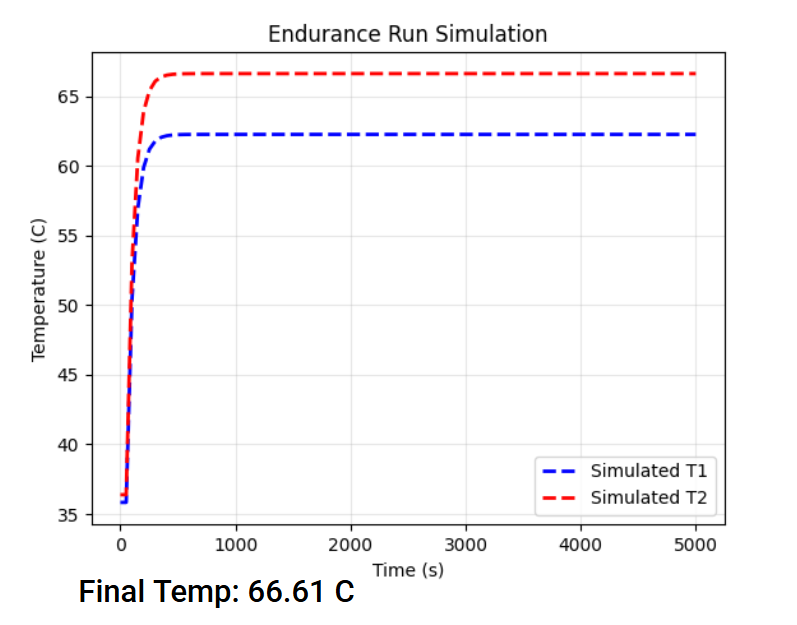
As a member of the Formula SAE team, I led the design and validation of a motor and inverter cooling system to mitigate critical high-voltage powertrain overheating. I initially developed a transient thermal model in Python utilizing the effectiveness-NTU method to simulate heat transfer and predict system behavior. To physicalize and validate these models, I engineered a dedicated test bench, meticulously sourcing necessary fluid instrumentation including flow, pressure, and temperature sensors. For the vehicle's physical packaging, I integrated complex fluid fittings and tubing conversions within SolidWorks, modeling the complete cooling assemblies and fluid routing lines. Furthermore, I modeled mounting tabs and welding jigs to optimize component placement and ensure precise clearance around critical powertrain subsystems. To maximize heat rejection, I designed and manufactured a custom 1/16" aluminum radiator fan shroud, which successfully increased airflow through the heat exchanger by 42%. Finally, I developed custom Python software for thermistor calibration and Logarithmic Mean Temperature Difference (LMTD) analysis, automating our thermal performance tracking and ensuring high sensor fidelity throughout our testing phases.
Project Images